
Case Study: How ALLMO Got ChatGPT to Crawl a New Website in Under 10 Minutes


Table of content
Summarize with AI


Background
When our friends at AI Citations Generator launched their platform, we saw the perfect opportunity to validate ALLMO.ai’s warm-up feature under real-world conditions. This case study documents what happened when we applied our AI crawler optimization strategy to a brand new domain that had never been seen by AI search engines before.
ALLMO.ai’s warm-up feature is designed to accelerate AI content discovery by signaling new or updated content to AI crawlers. The feature targets the bots that power AI-assisted search and chat interfaces, including PerplexityBot, OAI-Search Bot (used to surface websites in search results), GPTBot (crawl content used in training OpenAIs foundation models) and ChatGPT-User (used in ChatGPT user actions). Helping to speed up discovery process from weeks to minutes. Usually AI crawler discovery takes up to 2 weeks but can vary significantly depending on company size, as reported by industry sources [1], [2], and aligned with my own observations.
In short, warm-up addresses a critical AI search optimization fundamental:
- AI can’t cite pages it has never discovered.
- AI can’t mention information about companies it has never discovered.
The Challenge
AI Citations Generator was launching on January 19th 2026 with a brand new website that therefore had zero visibility in AI-powered search engines like ChatGPT, and Perplexity. By nature, as the website and offering was brand new the pages had never been crawled before, and were not part of any training data set.
The key question: Could ALLMO.ai’s warm-up feature accelerate the discovery and indexing process for AI crawlers on a completely new site?
The Starting Point
Test Parameters:
- Target: Brand new domain (aicitationsgenerator.com) with no prior AI crawler exposure
- Monitoring Tool: Vercel AI Bot Analytics
- Submitted Pages (Test Group): 6 strategic pages selected for AI crawler optimization (home page + 5 blog posts)
- Control Group: 13 additional blog pages NOT submitted through ALLMO.ai’s warm-up feature
- Observation Period: 48+ hours of continuous monitoring via Vercel AI Bot Analytics.
- Methodology: 6 randomly selected pages were submitted through ALLMO.ai’s warm-up feature while leaving other blog content as it is. This created a clear A/B test scenario where we could measure the direct impact of our optimization strategy.
The content differed for each page, but always related to the same topic (AI native backlinks).
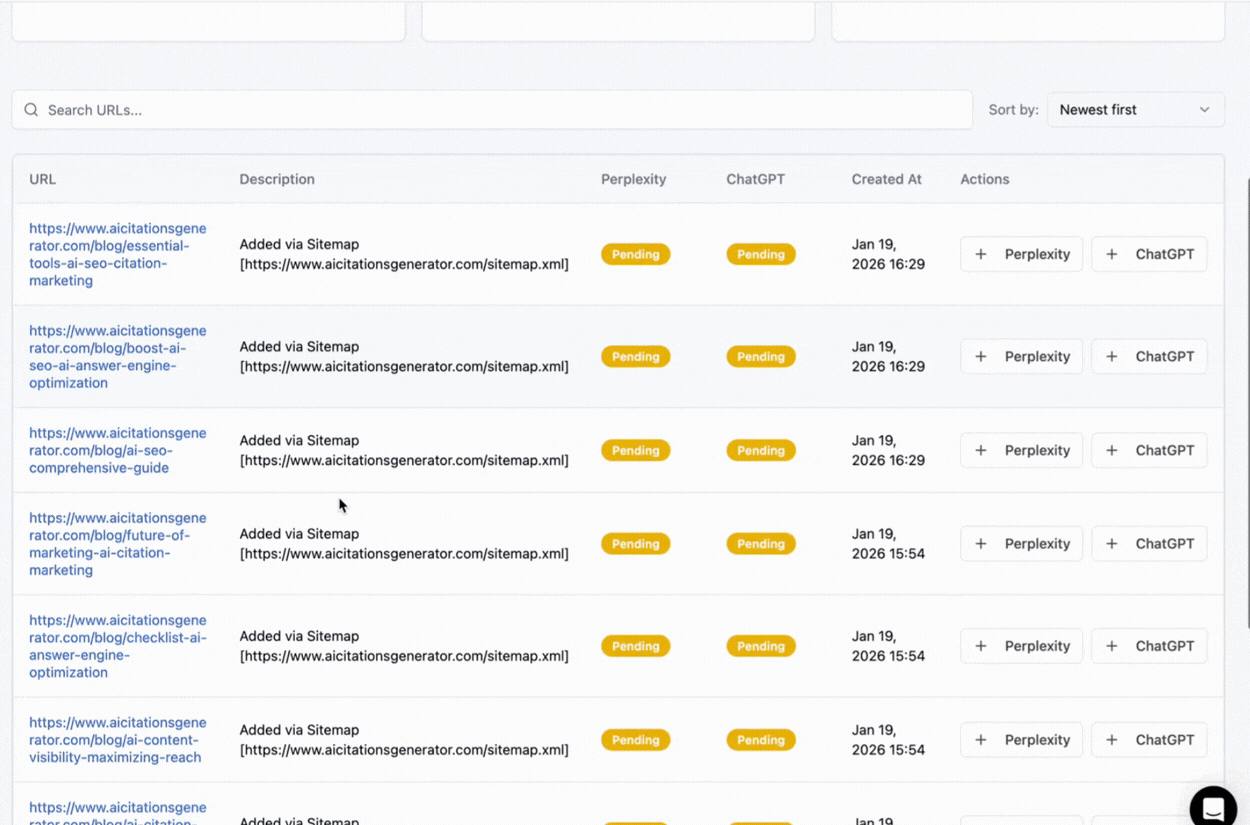
The Results
We successfully observed crawling:
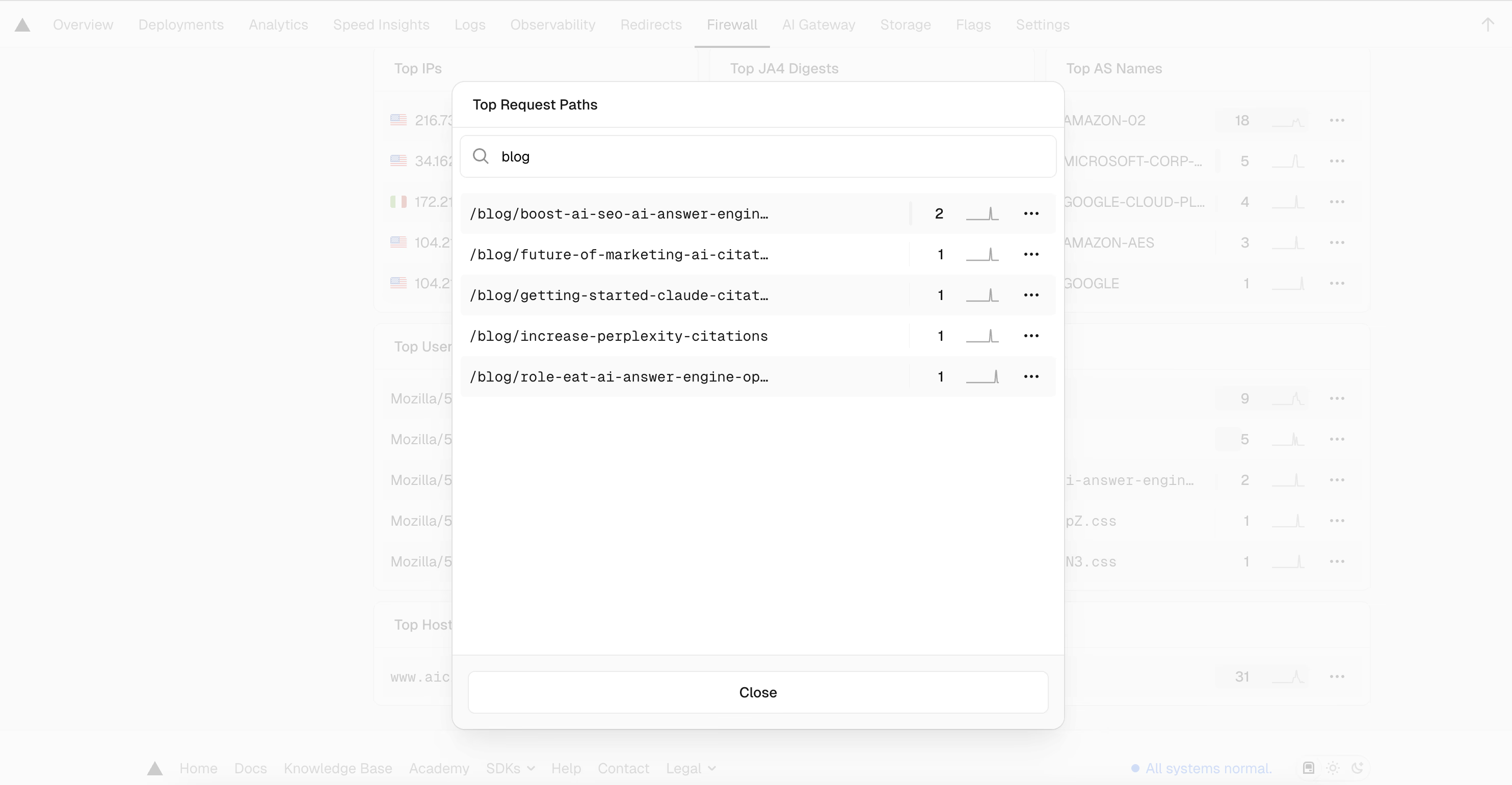
- ✅ ChatGPT Bot hit all 6 submitted pages within 10 minutes.
- ✅ Perplexity Bot hit all 6 submitted pages within 10 minutes.
- ✅ Pages appeared in AI search results even before being indexed by Google.
Pages in the control group without warm-up showed different results
- ❌ Zero AI bot detection on non-submitted blog pages at the time the warm-up was trigged.
- ❌ Only 5 of 16 pages were crawled after 8 hours (possibly as a secondary effect)
- ❌ 11 pages had zero crawler activity within the first 48 hours. AI crawlers simply missed them.
This also proves ChatGPT does not automatically crawl all subpages upon discovering a new domain. As the results show, we observed a clear distinction between warmed-up and non-warmed-up content, further validating the feature’s effectiveness.
Key Findings
- AI Bot Crawling Can Be Accelerated
ALLMO.ai’s warm-up feature reduced the time-to-first-crawl from a few hours, in some cases days (or never) to literally 3 minutes. For a new site competing for AI visibility, this acceleration is game-changing.
- Selective Crawling
AI bots don’t automatically discover all pages on a new domain. The stark difference between submitted pages (crawled immediately) and non-submitted pages (ignored completely) proves that strategic optimization is essential.
- Outpaced Google Indexing
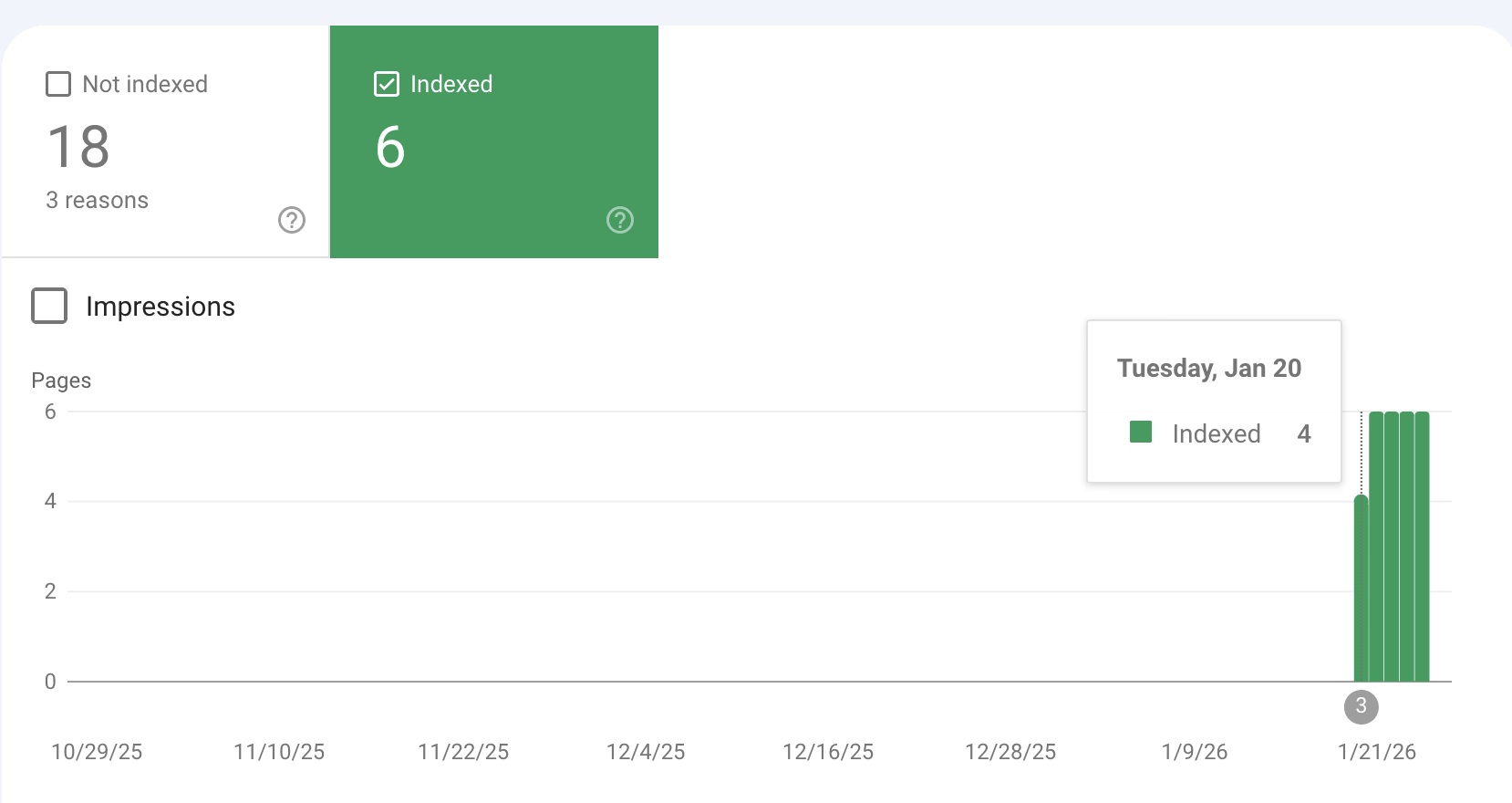
The test pages were crawled by AI bots on January 19th but weren’t indexed by Google until January 20th. This confirms that AI bots use Google amongst other sources, but don’t rely on it. And with ALLMO’s warm-up feature, you can get your content recognized by AI models faster than Google’s own crawlers, and are independent from 3rd party search engine indexing.
- Sustained Engagement Through Repeated Crawling
AI crawlers were detected hitting the warmed-up pages repeatedly throughout the observation period. This reveals another critical insight. AI bots don’t memorize pages but revisit them. Making the 5-day warm-up cycle an effective way to ensure your content doesn’t just get discovered once, but gets AI models to actively process and engage with your content consistently. This is important for discovery, as crawling budget and time constraints may lead to pages just being skimmed the first time they are discovered
- Measurable Impact
Using Vercels AI Bot Analytics provided concrete evidence of crawler behavior, allowing us to track when AI crawlers discover new pages. Results were also verified through reviewing the grounding sources in the response from the AI responses directly within ALLMO.ai.
AI Bots Observed
The following AI crawler user agents were detected during the test:
| AI Model | Crawler Bot Name | Purpose |
|---|---|---|
| Perplexity | Mozilla/5.0 AppleWebKit/537.36 (KHTML, like Gecko; compatible; PerplexityBot/1.0; +https://perplexity.ai/perplexitybot) | Crawls and indexes web pages for Perplexity’s AI search results and citations. |
| OpenAI | Mozilla/5.0 AppleWebKit/537.36 (KHTML, like Gecko); compatible; ChatGPT-User/1.0; +https://openai.com/bot | Fetches live web pages on demand when a user asks ChatGPT to browse or reference a specific URL. |
| OpenAI | Mozilla/5.0 AppleWebKit/537.36 (KHTML, like Gecko; compatible; GPTBot/1.3; +https://openai.com/gptbot) | Crawls public web content for OpenAI model training and improvement. |
| OpenAI | Mozilla/5.0 (Macintosh; Intel Mac OS X 10157) AppleWebKit/537.36 (KHTML, like Gecko) Chrome/131.0.0.0 Safari/537.36; compatible; OAI-SearchBot/1.3; robots.txt; +https://openai.com/searchbot | Indexes content for OpenAI’s AI search, grounding, and citation systems. |
| OpenAI | Mozilla/5.0 (Macintosh; Intel Mac OS X 10157) AppleWebKit/537.36 (KHTML, like Gecko) Chrome/131.0.0.0 Safari/537.36; compatible; OAI-SearchBot/1.0; +https://openai.com/searchbot | Earlier version of OpenAI’s search crawler for AI search and retrieval. |
The Cost of Waiting
AI can’t cite content it hasn’t seen. Without proactive optimization you are at the mercy of the AI crawlers, discovery can take a few hours for large companies, but in the case of start-ups and smaller brands often days or weeks, or may never happen at all.
For time-critical content, this delay is devastating:
- Event announcements: Your conference or webinar could be over before AI assistants know it exists.
- Special promotions: Limited-time offers expire before they are surface to AI chatbot users, or are referenced when they are already outdated.
- Hiring job posts: You miss a growing audience of candidates who ask AI assistants about job opportunities. Delays in AI crawling can prevent time sensitive roles from reaching qualified candidates quickly.
- New product launches: Days of invisibility means days of lost revenue. For the AI it’s like your product never launched. Would you accept a 2 week launch delay, that can be solved with the click of a switch internally? Probably not, so why risk it for AI discovery.
But even for standard website updates like blog posts, case studies, or new service pages, delayed discovery is a missed chance.
Think about it as opportunity costs: every day your content isn’t discovered by AI assistants, is a day your competitors are capturing traffic, leads and revenue from queries that could be going to you.
Conclusion
ALLMO.ai makes a difference: while other tools only monitor bots and crawler activity, the warm-up feature takes it a step further by bringing relevant crawlers directly to your page.
This case study demonstrates real-time crawling by ChatGPT and other AI assistant is possible, and can significantly speed up content discovery.
Want to see these results for your own content? Start optimizing with ALLMO.ai’s warm-up feature and track your AI search visibility in real-time.
Summarize with AI
More articles


Track your AI search visibility
See where your brand appears in ChatGPT, Perplexity, and other AI search engines.